
Mukherjee said Prime Minister Narendra Nodi and Chinese President Xi Jinping Would be meeting soon on the margins of G-20 summit scheduled to be held in China later this year.

The proposed China visit of Oli, who took over as prime minister in October, is in marked contrast to the usual practice the new prime ministers of Nepal follow. Most of the Nepalese premiers have visited India, ahead of China.

The deal would allow Japan to export nuclear technology to India.
It hopes to attract billions of dollars in investment by this move, and may ease some restrictions on foreign inflows.

'It is in the interest of both sides that the visit of the US President is seen as being successful. Both sides have invested considerable political capital in it. This rapid exchange of visits and the decisions taken have to be justified, beyond the symbolism, which is no doubt important in itself. This opportunity to impart a fresh momentum to ties should not be missed,' says former foreign secretary Kanwal Sibal.

'Both have a very nationalistic view of foreign policy.' 'They think they are shrewd and clever diplomats.'

What did Narendra Modi tell former Utah governor Jon M Huntsman when he met him? Aziz Haniffa/Rediff.com reports from Washington, DC.

'The US wants Modi to succeed because we want India to succeed. For our part, when India thinks of its partners in the world, we want it to think of the US first. That means positioning our country as the preferred provider of the key inputs that can help to propel India's rise.' 'The meeting between Modi and Obama is, and must be, an opportunity for true strategic dialogue -- not a scripted exchange of talking points, but an open discussion of the big questions. What kind of world do we want to live in? What are our true priorities? And most importantly, why does this partnership still matter?'

'There shall be no change in India-Japan ties,' predicts Rajaram Panda.
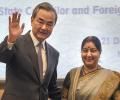
China has been trying to build lobbies of influence and mould public opinion in India since at least 2017, and large sums have been invested in the effort, reveals former RA&W officer Jayadeva Ranade.
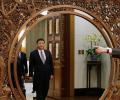
China's white paper on Asia-Pacific security cooperation extends an olive branch to India. It mentions India 15 times -- a record in all Chinese white papers issued so far. New Delhi's response will need to be carefully calibrated, says China expert Srikanth Kondapalli.

'In the past the US has been reluctant to name Pakistan directly in an US-India joint statement.'
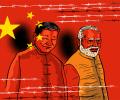
The reasons for China's negative response are located in its territorial dispute with India but also to its grand designs of dominating the region from its previous position of being merely a "balancer" between India and Pakistan, points out Srikanth Kondapalli, Professor in Chinese Studies at JNU.

Nevertheless, border dispute will feature prominently on Modi's agenda but the matter won't be discussed at length. Nayanima Basu reports
'At this point, it does not appear to be a Lehman Brothers kind of crisis, which had a domino effect on the financial system.'

During his visit, first by an Indian prime minister in 34 years, Modi will seek to enhance cooperation in energy and trade and reach out to investors to hardsell India as an attractive business destination.

The Sheikh Hasina-Narendra Modi summit put India-Bangladesh ties on a firmer pitch. Brigadier S K Chatterji (retd) takes stock.

'Gloom is nowhere in sight, with healthy foreign exchange reserves, a strong rupee, healthy tax collections, corruption and crony capitalism under check,' argues Gopal Krishna Agrawal.

The landmark civil nuclear deal sealed on Friday with Japan is strikingly similar to the agreements India has with the US and some other countries but contains some added features on safety and security, reflecting Japan's concerns on the issue.

'New Delhi showed itself willing -- at least for a period -- to tolerate the risk of conflict and to withstand Beijing's implicit and explicit threats.' 'But it also continued to try to cut some kind of deal with China to reduce tensions.'

'India is no longer the India of the '70s and the '80s.' 'It's a large country with the fastest growing economy.' 'In working with India, you just can't go and humiliate the nation publicly.' USIBC President Mukesh Aghi tells Aziz Haniffa/Rediff.com about how he advises American companies to do business with India, what he thinks of Modi's government and the way forward for the India-US relationship.
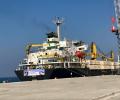
Iran's decision to keep India out and welcome China to the scene is a huge strategic setback for India, observes Dr Rajaram Panda.
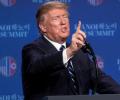
'India, which climbed the escalation ladder first, has climbed down.'
'It remains unclear what Indian objectives have been realised in precipitating the crisis in the first instance last Tuesday,' notes Ambassador M K Bhadrakumar.

Defence Minister Arun Jaitley leaves for Tokyo on Sunday evening for a security dialogue with Japan, a visit that acquires huge significance after North Korea's hydrogen bomb test on Sunday morning.

For many years now, India has given the Commonwealth short shrift so its support for the Commonwealth trade initiative signals a renewed interest in the body.

Thailand, Indonesia want unconditional access to India's multi-brand retail space.

Being a pragmatist Modi is not likely to give preference to China over Japan. Both security and economic aspects are likely to shape Modi's decision in terms of engaging the two biggest economies of Asia, says Sana Hashmi.

US Congresswoman Tulsi Gabbard, newly elected co-chair of the influential Congressional Caucus on India and Indian-Americans, discusses her vision for US-India ties with Rediff.com's Monali Sarkar.
Thinking big, China is changing the world order; with mixed priorities, we can but tag along, writes T J S George.

It's something to remember as New Delhi welcomes Sheikh Hasina, says Sunanda K Datta-Ray.

India on Thursday secured Mexico's backing in its bid to become member of the Nuclear Suppliers Group as it aggressively scouted for support ahead of a crucial meeting of the 48-nation nuclear trading bloc in Vienna.
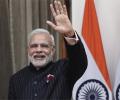
The host country has been pressing for a discussion at the 10th G20 Summit on the conflicts in Syria and the worst migrant crisis since World War II.

'Building on the potential for closer ties is the changing narrative in each country about the other. The Chinese narrative on India has become significantly more positive over the past few years,' says Walter Andersen and Zhong Zhenming.

The Budget sets out a comprehensive vision.
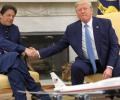
'Modi, with his sharply honed political savvy and undoubted grasp of international affairs, is a past master at taking the measure of world leaders.' 'He would be the last person to think of the unpredictable and not too well-regarded Trump as the mediator,' says B S Raghavan.

Describing India as an "emerging democratic superpower", Australian Prime Minister Tony Abbott on Thursday kicked off his two-day India visit during which the two countries are likely to clinch an elusive civil nuclear deal.
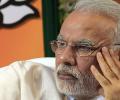
The new tax regime proposed by the Modi government may not have acceptance from all corners.

The ongoing civil war in the White House between representatives of the Alt Right, such as Steve Bannon, and the pragmatists has to end for Trump to complete a four-year term, says Hardeep S Puri.

'If there were no Ahmedabad programme -- no flashy town hall event in a huge cricket stadium with thousands cheering him on -- then Trump may well have decided not to go to India.'

For a rising country like China with its sights set on global and regional power, any coming together of the US and India is the worst case scenario. Hence, China is concerned with the emerging equations between New Delhi and Washington, says Srikanth Kondapalli.
